
Pike County Unclaimed Money
Unclaimed money in Pike County is held by the Indiana Attorney General's Unclaimed Property Division, waiting for residents to come forward and claim what is theirs. The state collects funds from dormant bank accounts, uncashed checks, forgotten insurance payouts, stock dividends, and a wide range of other financial assets. The search is free, and you do not need a lawyer or a paid service to look up your name. Pike County residents and former residents alike can check within minutes. Many people are surprised to find money they forgot about or never knew existed.
Pike County Quick Facts
Indiana Unclaimed Money in Pike County
The Indiana Attorney General runs the state's unclaimed property program. Right now, the system holds more than $914 million across roughly 5.1 million accounts. About one in seven Hoosiers has unclaimed property sitting in the state's database. For Pike County residents, that means there is a real chance money connected to your name, an old address, or a family member is being held right now.
Property ends up unclaimed when businesses and financial institutions lose contact with the owner. Banks, insurance companies, utility providers, and other holders must report dormant accounts to the state. Under IC 32-34-1-19, most accounts are transferred after three to five years of no owner contact. Once the state takes custody under IC 32-34-1-30, your right to claim never expires. There is no deadline.
The search tool is at indianaunclaimed.gov, operated by the Attorney General's office. The state pays back more than $1 million to owners every single week. You can also call 1-866-IN-CLAIM (1-866-462-5246) with questions or send an email to updmail@atg.in.gov.
Old addresses count. If you lived in Petersburg or anywhere else in Pike County years ago, property from that time period may still be in the system tied to your name.
Pike County Treasurer's Office
The Pike County Treasurer's office is based in Petersburg at 801 Main St, Petersburg, IN 47567. The treasurer handles local tax collection, property tax payments, and certain county financial matters. The office does not manage the state's unclaimed property program, but it is worth contacting if you believe the county itself owes you a refund, such as an uncashed jury fee check, an overpayment on county taxes, or a vendor payment that was never cashed.
For most unclaimed money, including old bank accounts, insurance proceeds, wages, and utility deposits, the state's database is where you need to search. The county treasurer and the state unclaimed property division handle different things. Knowing which office to contact saves time.
The Pike County website at pikecounty.in.gov has general contact information for all county offices. If you are unsure who to call, start there and ask the main county number to direct you.
| Office | Pike County Treasurer |
|---|---|
| Address | 801 Main St, Petersburg, IN 47567 |
| County Website | pikecounty.in.gov |
How to Search Pike County Unclaimed Money
To search for unclaimed money tied to Pike County, go to indianaunclaimed.gov/app/claim-search. Type in your last name and, if you want, your first name to narrow the results down. The database covers all of Indiana, so every county's records show up in one place. Search every name you have used, including maiden names, hyphenated names, and business names if you owned a company.
The Pike County website below is a useful starting point for locating local government contacts and services relevant to residents at pikecounty.in.gov.

From the county site, you can reach individual offices and confirm local contact details for matters that may require in-person follow-up in Petersburg.
Once you spot a match in the state database, click the claim button and start the online process. Most claims can be completed without mailing anything. The Attorney General's team reviews each submission and may ask for supporting documents before releasing funds. If you have questions along the way, call 1-866-IN-CLAIM or email updmail@atg.in.gov. Response times are typically a few business days.
What Counts as Unclaimed Money
Indiana's unclaimed property law covers many types of financial assets. Under IC 32-34-1-1, any financial asset where the owner has not had contact with the holder for a set dormancy period can be reported as unclaimed. For Pike County residents, this could include old checking or savings accounts from local or regional banks, certificates of deposit, and money market funds.
Beyond banking assets, the list extends to wages that were never picked up, uncashed payroll checks, insurance policy proceeds, stock dividends and shares, credit balances from store accounts, utility deposits, tax refunds, and money orders. Safe deposit box contents can also become unclaimed if the rental fee goes unpaid and the owner cannot be located. Businesses holding unclaimed assets must report them to the state annually under IC 32-34-1-26. Most accounts in the state system hold under $100, but the largest single claim ever paid in Indiana reached $750,000.
Claiming Your Pike County Property
Filing a claim is free. The state charges nothing. You do not need to hire a finder service or pay anyone a percentage of your claim. Avoid any company that demands upfront fees or a cut of your money to file on your behalf. The process is simple enough to do yourself.
Here is how Pike County residents can claim their property:
- Go to indianaunclaimed.gov and search your name
- Find the record that matches your information
- Click to start the online claim and enter your contact details
- Upload any requested documents or mail them to the Attorney General's office
- Wait for the office to review and approve your claim
- Receive payment by check or direct deposit
Documents required vary by claim size and type. Small claims often need only a photo ID. Larger amounts may require an old bank statement, a utility bill showing your address, or similar proof of ownership. If you are claiming property for someone who has passed away, you will also need a death certificate and documentation showing your legal right to the estate, such as a will or letters of administration. The Attorney General's office handles each claim individually and will reach out if they need more from you.
Search Multiple States for Unclaimed Property
If you have lived outside Indiana at any point, you may have unclaimed money in other states too. The national search tool at missingmoney.com is the official multi-state portal run by the National Association of Unclaimed Property Administrators. One search covers Indiana and dozens of other participating states at the same time.
The MissingMoney.com portal shown below covers Indiana and many other states in a single search, making it easy to check everywhere you have lived at missingmoney.com.
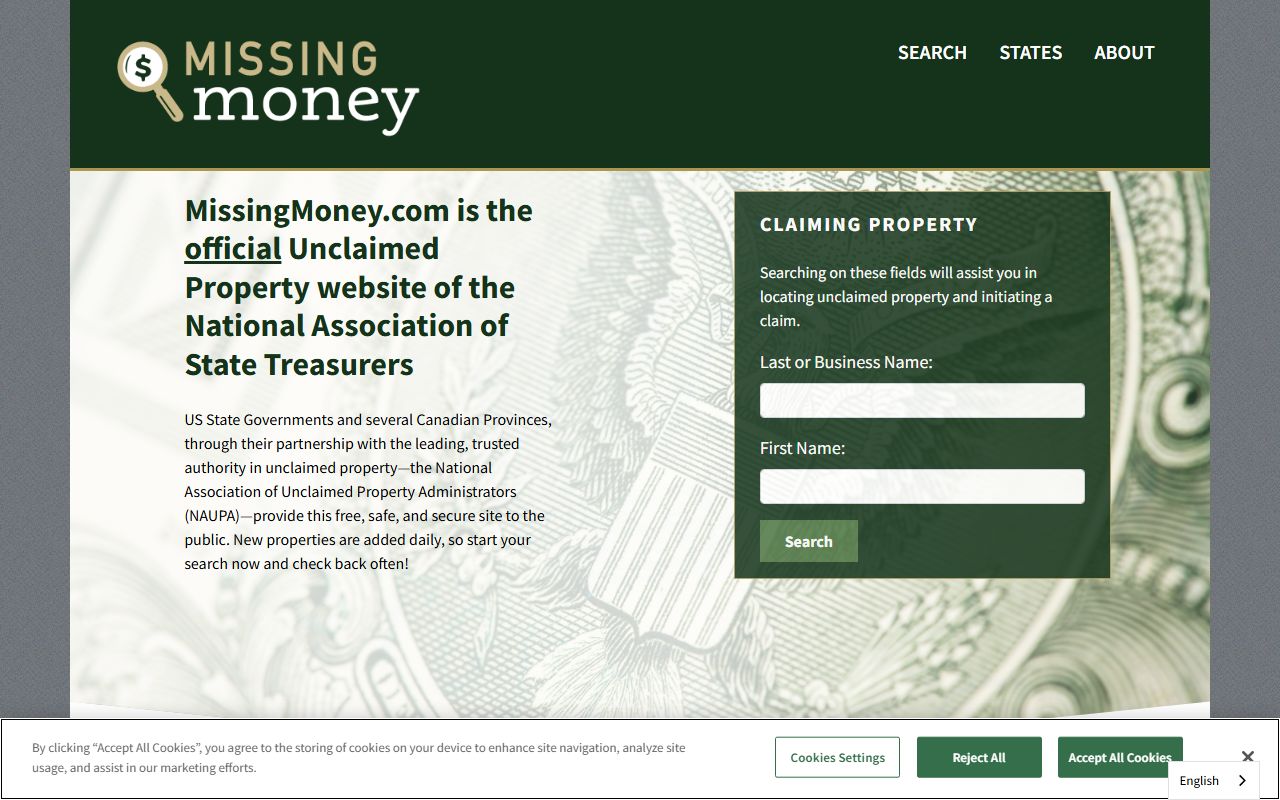
After running your search on missingmoney.com, also check Indiana's own tool at indianaunclaimed.gov to make sure you cover everything. Both searches are free and do not require you to create an account just to look.
Pike County residents who moved here from other states should run both searches. Former residents who have since left Indiana should do the same. There is no limit to how many times you can search, and it costs nothing each time.
Cities in Pike County
Pike County includes Petersburg as the county seat, along with smaller communities such as Winslow, Otwell, and Velpen. None of the cities in Pike County currently meet the population threshold for a dedicated city page. Residents of any community in Pike County can use the state's free search tool at indianaunclaimed.gov to check for unclaimed money tied to their name or address.
Nearby Counties
Pike County borders several other Indiana counties. If you have lived near a county line or had financial accounts in a neighboring area, it may be worth looking at nearby county pages as well.